This past year belongs firmly in the latter category for us at Phius. It was not always easy, but it was deeply consequential. The year 2025 saw Phius mature, adapt, and lean into complexity without straying from our core mission.
So I want to provide more than just a list of last year’s accomplishments. So, this post is more a reflection on how Phius has evolved as an organization to meet a rapidly changing climate, market and policy landscape.
From Vision to Scale: Phius Buildings as Reality
Perhaps the most striking shift this year was not conceptual, but physical.
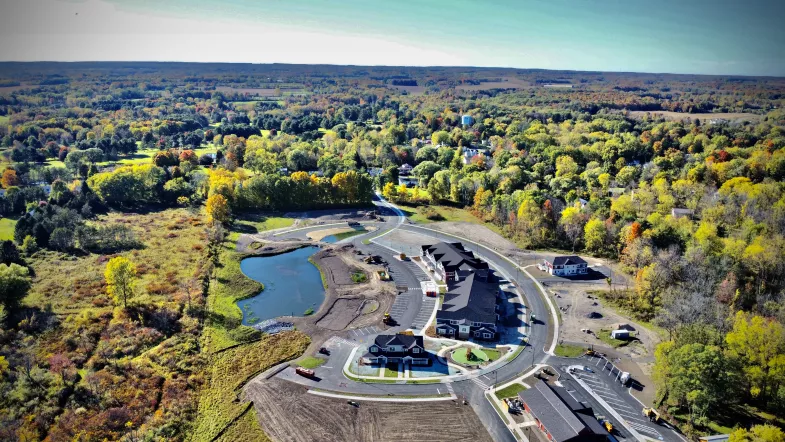
Across the country, Phius Certified buildings rose at unprecedented scale, particularly in the multifamily sector. The once-aspirational idea of large, complex projects delivering ultra-low energy demand, superior comfort, and long-term affordability is now commonplace. They are a practical, scalable solution for climate-critical housing and buildings in general.
This transition from “proof of concept” to “proof of scale” is one of Phius’ most meaningful milestones to date.
Innovation with Discipline: Standards That Evolve
Innovation has always been central to Phius’ identity, but this year sharpened our understanding of how innovation must function inside a growing organization.
Our certification frameworks continued to evolve in response to new data, new building typologies, and new grid realities. The work behind the scenes — climate-specific modeling, iterative standards refinement, and quality assurance — was intense. But our dedicated staff was up to the task.
The result is standards that remain ambitious yet buildable, and rigorous yet responsive to real-world constraints.
This balance — between leadership at the frontier and responsibility to practitioners — is where Phius increasingly distinguishes itself.
Organizational Growth and Structure Updates
Behind every successful building program is an organization capable of sustaining it.
This year marked a turning point in Phius’ internal architecture. Governance structures were strengthened, and roles, responsibilities and decision pathways were refined to support a larger, more complex organization.
These changes may be invisible to the outside world, but they are essential. They ensure that Phius can scale without losing trust, technical credibility, or mission coherence — especially in a political environment that is unpredictable at best.
Access and Equity: The Future of Building for All
One of our core lessons from this year was that market transformation without access is incomplete.
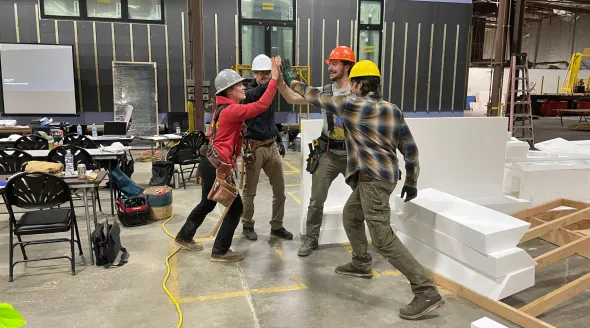
Phius doubled down on efforts to lower barriers to participation in the design and construction of passive buildings through training pathways, partnerships. And we will continue to develop innovative ways to make passive buildings eminently accessible. Expanding who can participate in the high-performance building industry is not a side mission. It is central to our mission to create a built environment that supports healthy living for all.
A Changed Context and a Sharpened Purpose
Everything Phius accomplished in 2025 unfolded against a dramatically shifting external backdrop that included evolving policy signals, market volatility, and renewed political uncertainty around climate action.
Rather than retreat, we at Phius used this context to sharpen our role.
When policy is inconsistent, standards matter more.
When markets are volatile, performance certainty matters more.
When timelines feel compressed, building it right the first time matters more.
High-performance passive buildings are now foundational infrastructure for a livable future, providing a proven path to comfortable, efficient, healthy living for all.
Looking Ahead
If this year taught us anything, it is that progress is rarely linear — but it is cumulative.
The progress Phius made this year in all aspects of the organization sets the stage for a next chapter that includes: deeper integration with grid resilience, broader adoption across housing and commercial construction markets, and continued leadership in defining what it means to foster a healthier built environment.
Our 2025 mattered because it changed what is now possible. And now it’s time to get to work to make those possibilities a reality.