This one goes out to our Phius Certified professionals – designers, builders, verifiers – and to our allied developers. I was asked to write about my thoughts in the wake of Building Science Summer Camp, so below are some thoughts stoked by the event.
For one thing, I’ve come to the realization that to live up to my title as Chief Building Scientist at Phius, I have to keep an eye on almost all the science. It’s not just about, for example, the physics of water vapor diffusion and chemistry of air pollutants, or biology of mold or infectious aerosols, but also planetology, ecology, psychology, physiology, anthropology, nuclear physics and so on.
Reason being, we are not doing science for its own sake. We’re trying to apply it to something. I studied engineering because of a definition I read that said something to the effect of “using scientific knowledge for the benefit of humankind.” From what I’ve read about the Enlightenment, this was what science itself was for, right from the start. It was argued that it would be a failure of Christian charity not to look into the “remediable causes of human suffering,” as I believe Voltaire put it.
I told the Phius leadership before Summer Camp that I think our lane is “shelter.” That’s the word for the basic human need with which we are concerned. “Buildings” is too broad I think – I’m not as concerned about logistics centers and casinos. “Housing” is too narrow, because we are concerned with nonresidential buildings such as schools and community centers that can have, e.g., a cooling-center or warming-center function. Shelter is our field of applied science. And for that we need to draw on a lot of sciences.
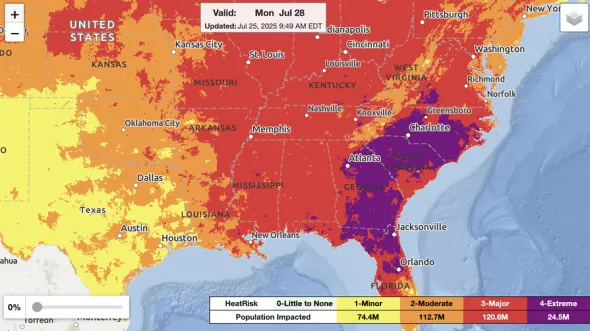
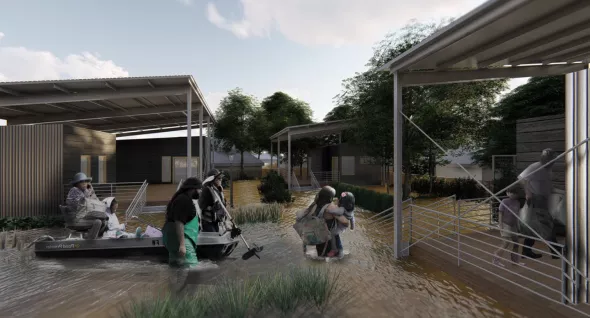
Per climatology, I’m convinced there is going to be a lot of need for shelter, because of extreme weather events – stoked by global warming – smashing up the existing building stock and other infrastructure. A great many people are going to need better shelter where they live, or new shelter when they are forced to move by flooding or wildfire or unlivable heat. So there’s a lot of work to be done.
The Phius Communications Team has a webinar on Sept. 9 about marketing passive building. Not to invade their domain, but I’ve made an argument before that passive building is a “value-neutral technology.” The qualities of Phius buildings are valuable properties for your building to have, whether you’re a looking-out-for-number-one libertarian or a housing-is-a-human-right progressive. From a developer perspective, I still think these are bankable properties in the long run.
But I want to somewhat take back value-neutrality, because it may leave us open to a charge of being disaster capitalists. As I noted, science itself circa 1700 wasn’t supposed to be value-neutral; it was supposed to be doing some good. And certainly when it came to application, this attitude was written into our engineering ethics. Let’s review:
IEEE I. 1. “to hold paramount the safety, health, and welfare of the public, to strive to comply with ethical design and sustainable development practices, to protect the privacy of others, and to disclose promptly factors that might endanger the public or the environment”
ASME Principle I & Canon I “Engineers uphold and advance the integrity, honor and dignity of the engineering profession by: 1. Using their knowledge and skill for the enhancement of human welfare;...Engineers shall hold paramount the safety, health and welfare of the public in the performance of their professional duties.”
ASHRAE“A. Efforts of the Society, its members, and its bodies shall be directed at all times to enhancing the public health, safety and welfare. B. Members and organized bodies of the Society shall be good stewards of the world’s resources including energy, natural, human and financial resources C. Our products and services shall be offered only in areas where our competence and expertise can satisfy the public need.”
AIA, rules 1.403 and 1.404 “Members shall not knowingly design spaces intended for execution. Members shall not knowingly design spaces intended for torture, including indefinite or prolonged solitary confinement…What is lawful and what is ethical are two separate inquiries”
Note the primacy of the public good, even if working for private companies or clients.
You the professionals are the ones out there making things happen. The Phius R&D team hopes that our work supports you in the fulfillment of these ethical commitments, and that your clients will as well. Keep up the good work; we’re all counting on you.
About the Author
Graham S. Wright, PhD
Chief Building Scientist & Chair of the Phius Technical Committee