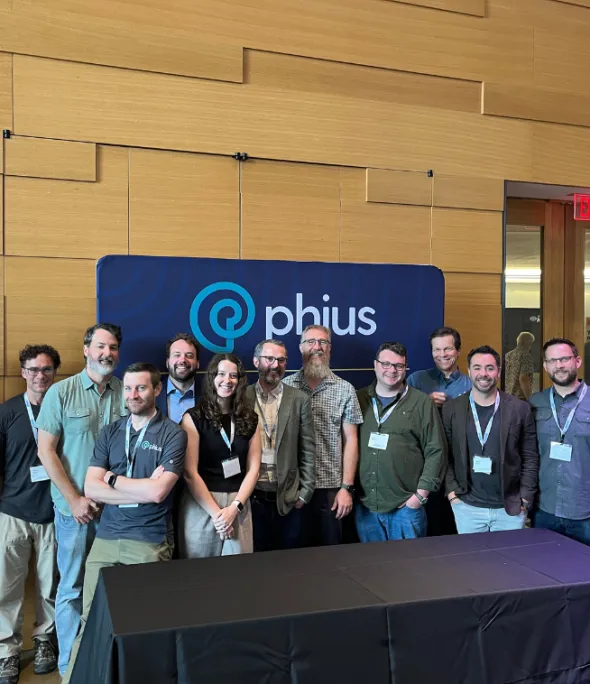
Earlier this month, I had the privilege and opportunity to head down to Austin, Texas to attend and present at the Humid Climate Conference. Hosted by the Phius Alliance Austin Chapter, this conference is a biennial gathering of those interested in passive and high performance building in humid climates. I always enjoy a great opportunity to meet passionate people, listen to their stories and experiences, and try and determine how my work can best support them going forward.
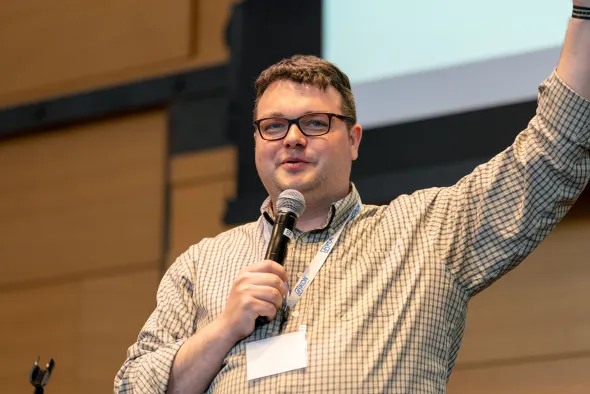
Phius Certification Manager Al Mitchell presents during the 2026 Humid Climate Conference
The day before the conference, there were tours of three Phius Design Certified single-family homes in the Austin area, which were the 4th, 5th and 6th passive buildings I’ve personally experienced. Most exciting is that the three homes were all in different states of construction, rather than being completely finished. This always gives me an appreciation for the craftsmanship that goes into executing the details necessary to achieve an airtight and thermal bridge-free envelope. It was also great to get to see the Dolphin Cove retrofit, a project that I had the opportunity to review, underway and on a successful path to full certification.
The theme of this year's conference was “Risks, Realities, and Rewards.” This very much supports the drive for healthier buildings that was expressed by many of the attendees. The conference takes place in one room, so there are no parallel tracks. I enjoy this setup, since all attendees are seeing the same presentations, making for good conversation later. Another aspect of the conference’s timeline that I enjoyed was that it alternates between individual presentations and panel discussions with those presenters. When other conferences do this, the individual presentations tend to end up in lightning-round style, and the presenters do not have the time to get into the depth of detail that I enjoy.
After the keynote by Liz McCormick, AIA Associate Professor at University of North Carolina Charlotte, and Z Smith, Principal and Director of Sustainability and Building Performance at Eskew Dumez Ripple, the programming included case studies of four local Phius Certified Projects and a handful of presentations on the various incentives (both financial and practical) for multifamily and low-income passive buildings. Speakers included Betsy Farrell Garcia of Auburn University's Rural Studio, Craig Stevenson of AUROS Group, and Stephanie Perrone of Austin Energy Green Building.
During my presentation, I spoke directly about a few of our hot humid climate-specific challenges, including weather data sets and how energy modeling responds to them. Chris Magwood spoke about the role of embodied carbon accounting in our decarbonization efforts, and we concluded with back-to-back presentations on the risks of mold in buildings — one from scientific mold assessment provider Dr. Eva King and the other from local mold litigation attorney Kristina Baehr.
A few of the above presentations really spoke to me. Liz McCormick and Z Smith spoke about their experience in high-performance work and the need for validating simulation work through measured data, which is something that is near and dear to my heart. Additionally, McCormick spoke about hands-on activities and testing she did with her students, where they built small mockups of building performance elements, such as a thermal chimney, and demonstrated it with theater fog and a high-speed camera. This sparked my curiosity, and I feel inspired to give it a try on my own.
The other presentation that really caught my attention was Chris Magwood and his discussion on embodied carbon in buildings. He walked through the structured research and data collection work he has been doing, and how he sees it impacting the work of those in high-performance building, especially the role of those working on energy modeling. The incorporation of embodied and operational carbon in energy modeling would bring another real-world impact into the optimization problem. The hard work in this is the databasing required to make the comparisons apples to apples, and Chris and his team at RMI have been working on this diligently.
By the end of the conference, I came away with a stronger appreciation for how much progress is being made in humid-climate design. The technical discussions were serious, but the atmosphere was optimistic. That combination matters: it suggests the field is maturing, and that better buildings are not only possible, but increasingly achievable at scale. It was also wonderful to get to connect with the genuine, passionate people working to make high-performance in hot humid climates a reality.