Our monthly Project Spotlights highlight the cutting-edge work being done by Phius professionals and provide examples of successful design and construction strategies. We feature projects of various sizes, typologies, and climate zones, offering you a peek behind the curtain of each.
Located in Boston’s Jackson Square, Betty Greene Apartments is a 65-unit, transit oriented development for Urban Edge. Built on a previously developed site within walking distance of the MBTA Orange Line, several bus routes, and various retail and neighborhood services, the project addresses a critical shortage of housing with a modern, high-performing building.
The project is 100% affordable, providing one-, two- and three-bedroom apartments for individuals and families making between 30-60% AMI (Area Median Income). Before design could begin, the site had to be created by assembling six separate parcels – a process that took years of coordination and ultimately stretched the timeline to nearly a decade from first acquisition to completion.
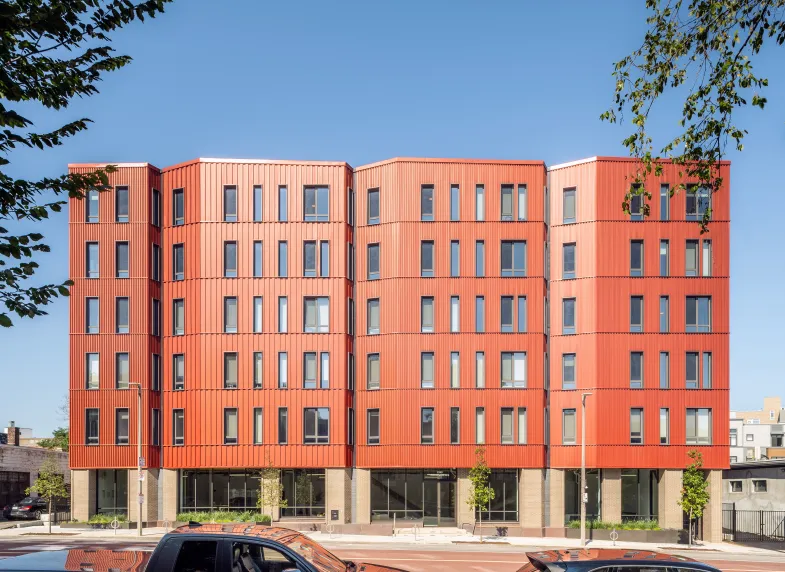
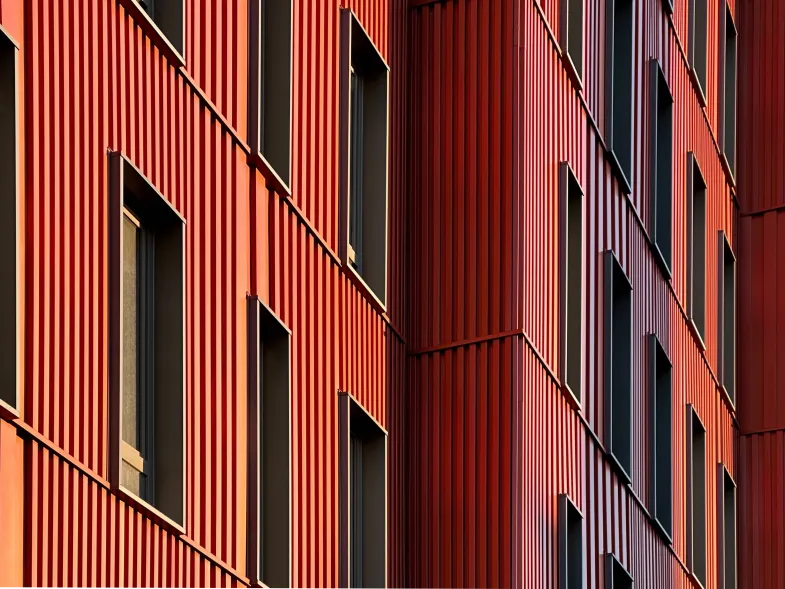
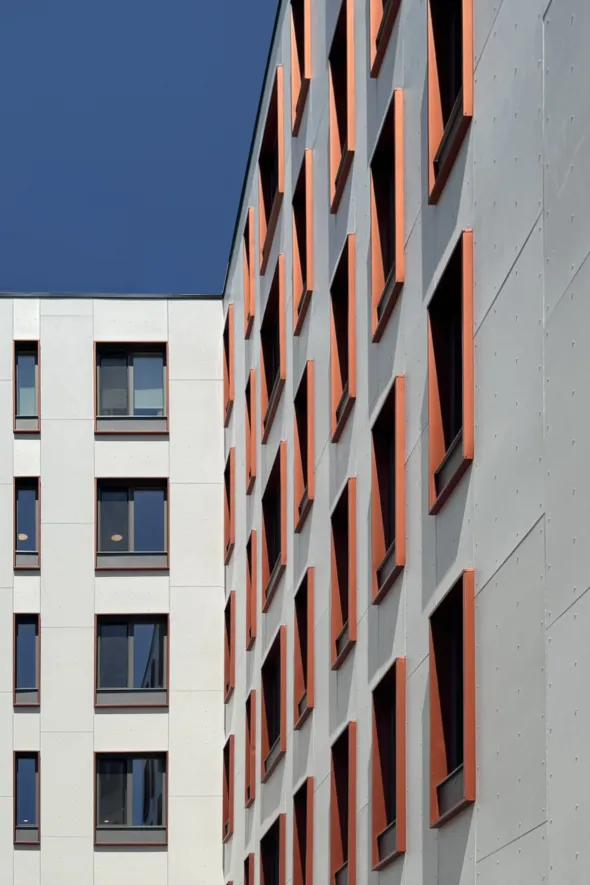
With frontage on both Columbus Avenue and Amory Street, the building responds to its dual context: a small commercial space activates the avenue side, while the main residential entrance and community spaces are located along the quieter residential street. The “C” shaped building uses a striking red corrugated metal rain screen on the street side elevations and a calmer white fiber cement panel on the inside of the courtyard.
The design team integrated energy modeling into the design process to optimize building envelope, minimize thermal bridging, and ensure airtight construction. Right-sized MEP systems, including a balanced energy recovery ventilation and a high performance all-electric central VRF system reduce heating and cooling loads, while a 90KW rooftop PV array further cuts energy use. These strategies lower greenhouse gas (GHG) emissions, reduce operational costs, enhance thermal comfort and indoor air quality, and provide residents with healthier, more comfortable living conditions and greater levels of resilience.
Digging Deeper
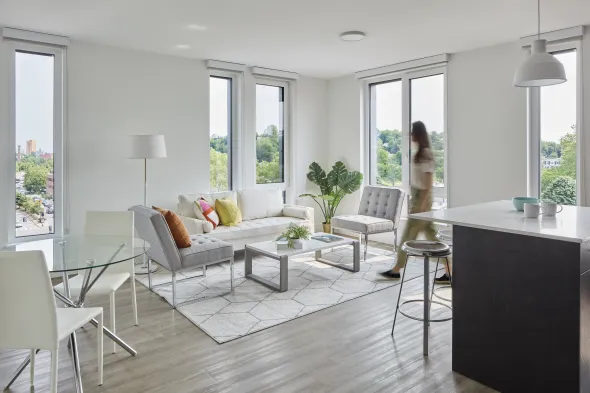
The building envelope includes robust levels of wall, roof, and floor insulation, continuity at intersections to avoid thermal bridging, high-performance glazing, and an uninterrupted air barrier to minimize energy loss and drive down heating and cooling loads. These elements also contribute to the building’s passive survivability, allowing the spaces to maintain comfortable conditions for longer periods of time during loss of power or heat.
The project utilizes an efficient centralized ERV system for mechanical ventilation and right-sized, cold-climate VRF’s for heating and cooling. Domestic hot water is provided by a future-electric ready centralized gas domestic water heating system, and the apartments have ENERGY STAR appliances and efficient LED lighting throughout. The project ultimately included an 86 kW solar PV system, although it was not part of the Phius Certification.