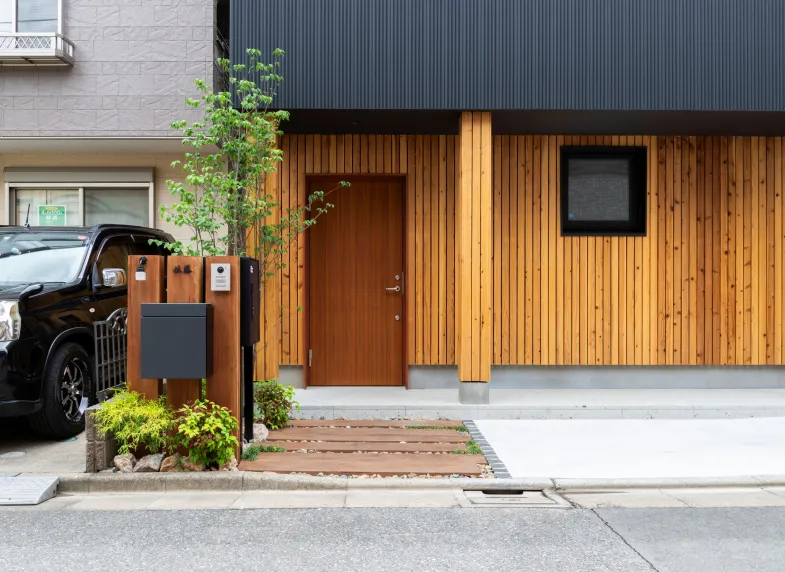
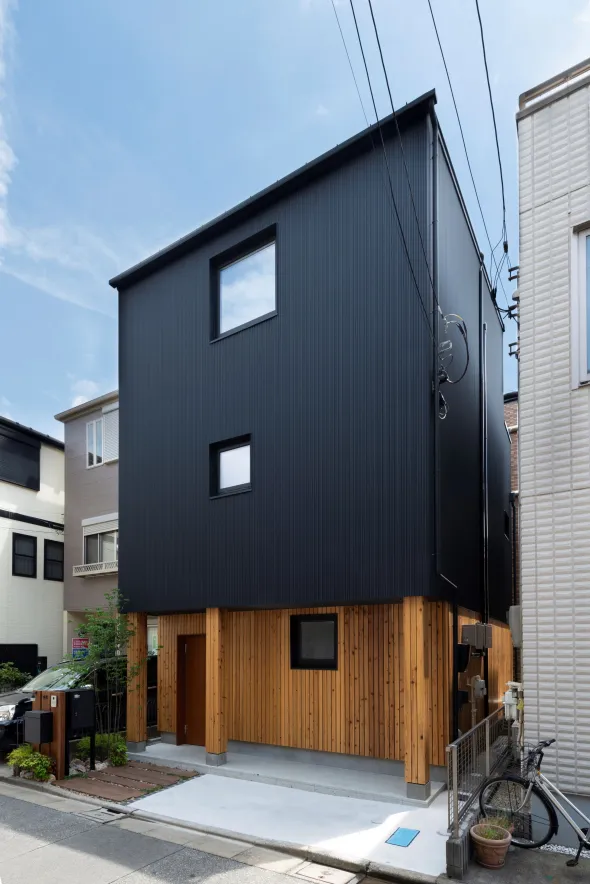
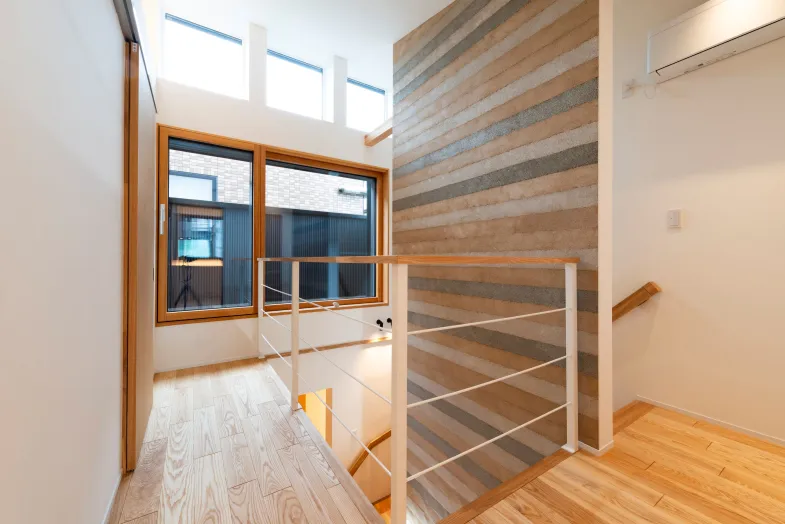
Our monthly Project Spotlights highlight the cutting-edge work being done by Phius professionals and provide examples of successful design and construction strategies. We feature projects of various sizes, typologies, and climate zones, offering you a peek behind the curtain of each.
Our June 2026 Project Spotlight is: Edogawa Passive House in Tokyo, Japan! Earning Phius CORE 2021 Certification in March of 2025, it is one of a growing number of Phius projects in Japan.
Project Team
Architect: Tosho Juken Co., Ltd.
Construction Company: Tosho Juken Co., Ltd.
CPHC: Kazumasa Tsushima
QA/QC: Sayo Okada
An Inside Look
In response to escalating construction costs, a dwindling skilled labor force, and the demand for greater efficiency in conventional post-and-beam construction, this project marks the realization of Japan’s first passive building executed with large-scale prefabricated wall panels. The approach establishes a transferable model for both deep energy retrofits and high-performance new construction within constrained urban infill conditions.
Sited in one of Tokyo’s most densely populated districts, the project demonstrates that Phius passive building standards can be met even under the challenging realities of compact, high-cost parcels. Through the use of panelized construction, the design team optimized constructability, minimized onsite labor requirements, and managed costs while upholding the rigorous performance benchmarks of Phius Certification.
The Edogawa Passive House serves as a prototype for narrow-lot, multi-story residences common in metropolitan Tokyo, where housing stock is typically characterized by thermal discomfort despite its urban convenience. By integrating strategies that simultaneously advance energy efficiency and buildability, the project lays a foundation for broader adoption of passive building principles in Japanese cities.
Ultimately, the Edogawa Passive House aspires to catalyze a new paradigm of urban residential development in which density, comfort, and sustainability coexist. As a replicable precedent, it extends the reach of high-performance building to contexts long considered inhospitable, fostering a more resilient and energy-conscious housing market in Tokyo and beyond.
Digging Deeper
The residence is conceived as a continuous vertical living environment, extending from the first to the third floor in an open-plan configuration that amplifies spatial flexibility while fostering passive environmental performance. The design intentionally harnesses solar gain, daylighting, and natural air movement, transforming the constraints of a compact Tokyo site into opportunities for sustainable comfort.
Encircled by adjacent buildings of similar height, the project deploys a generous clerestory aperture — the principal glazed opening — as a light well and thermal moderator. Paired with a ducted ventilation and heat pump system, this strategy ensures effective daylight distribution, controlled solar admission, and balanced air circulation, sustaining thermal comfort throughout the dwelling.
Crowning the structure, a mono-pitched roof integrates a 2.04 kW photovoltaic array with a 5.6 kWh battery storage system. This renewable energy infrastructure not only enables on-site generation and efficient self-consumption but also provides a resilient power reserve during grid disruptions. In a city vulnerable to seismic and climate-related risks, this capacity extends beyond operational efficiency to safeguard long-term occupant security and continuity of use.