Our monthly Project Spotlights highlight the cutting-edge work being done by Phius professionals and provide examples of successful design and construction strategies. We feature projects of various sizes, typologies, and climate zones, offering you a peek behind the curtain of each.
Builder: Synergy Construction Group / Cullen CM (Construction Management)
CPHC®: TBDA
Verifier: Eco-Achievers
Owner/Developer: Oak Park Residence Corporation
An Inside Look
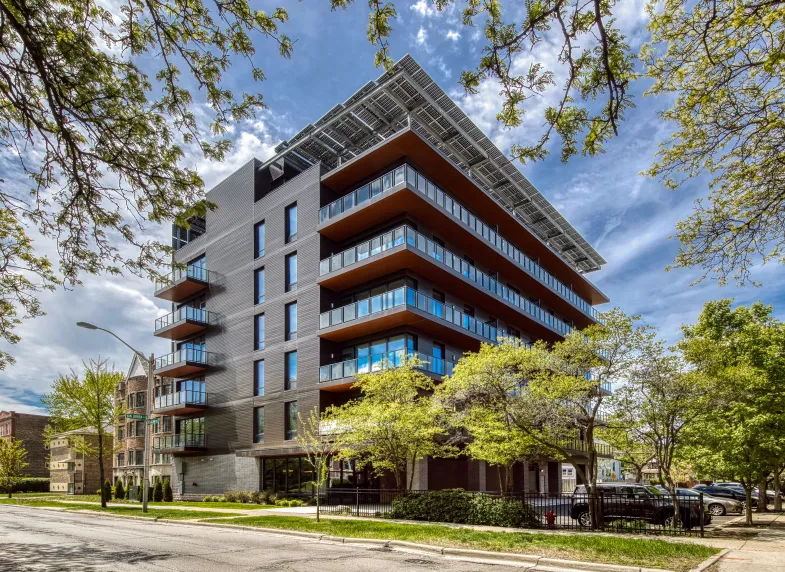
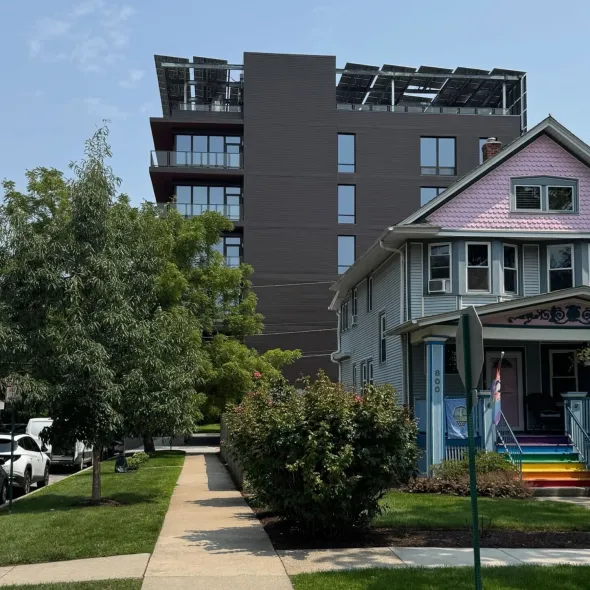
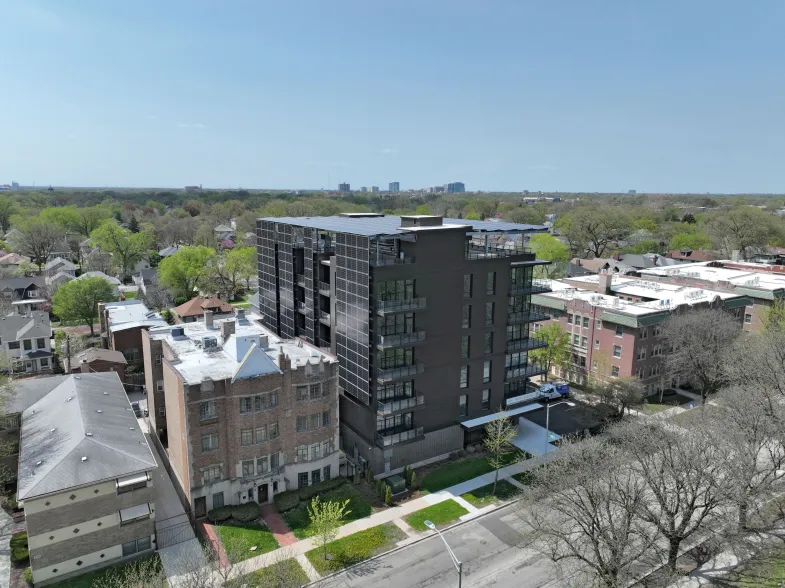
This 44-unit multifamily apartment building (20% affordable, 80% market rate) aimed to set an example by achieving Phius ZERO (with all solar on site) in a dense five-story building. Situated on the border between Chicago and Oak Park, the roof deck, available to all occupants and shaded by the 7,300-square-foot solar canopy, provides views to adjacent Columbus Park and the Chicago skyline. The building is the first major development on the east side of Oak Park in more than 50 years, and was an opportunity to increase density within walking distance to transit (CTA Blue Line and buses). As an elevator building, it provides needed accessibility in more affordable housing stock, in contrast to Oak Park’s many pre-war buildings.
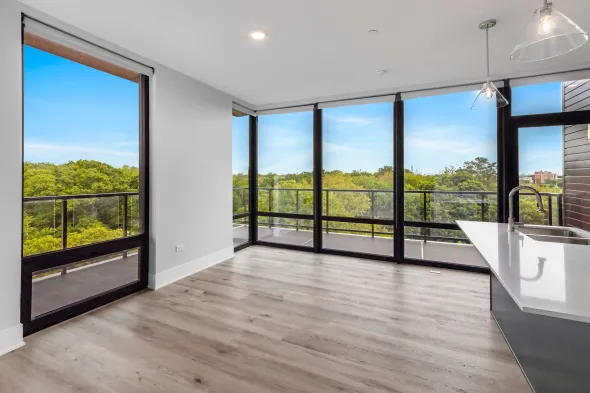
The idea of the building began in 2020 when Oak Park Residence Corporation’s (OPRC) director contacted Tom Bassett-Dilley to discuss the feasibility of Phius and zero energy to qualify for an Illinois Clean Energy Community Foundation (ICECF) grant. It was immediately evident that the scale of the building would require not only a solar canopy over the entire roof, but panels cascading down the south facade as well. TBDA was hired to provide CPHC services, and worked closely with first Kahler Slater, then Ware Malcolm architects to coordinate a design that would achieve Phius 2021 metrics. The design required limiting the glazing area (while providing spacious views), and careful balancing of shading (balconies were crucial for performance as well as unit amenities) and R-values; the energy model walks a fine line between heating and cooling energy. Rater services by EcoAchievers began in design development and smoothed the transition to and through construction (by Synergy Construction Group).
Digging Deeper
The energy saving strategies of the building are primarily passive, through careful envelope design. Heating and cooling is via rooftop VRF units. The installed solar array has a total of (372) 550W PV panels with 246 panels on the roof-mounted array that provides shade for the roof deck and 126 panels vertically on the south elevation. The total system size is 204.6 kW with an estimated yearly output of 221,400 kWh, which is anticipated to provide enough energy for the whole building to make it net-zero. To arrive at the estimate, the project team added an 8% buffer to the WUFI site energy model to establish an energy production budget, based on Phius monitored results from past projects.