A Garden Taking Root: Reflections on PhiusCon 2026 in Arizona
Phius Building Certification Associate and Phius Alliance Southwest Chapter President Alyssa Fink offers insight into the regional impact of PhiusCon 2026 in Phoenix.
It’s hard to believe it’s already been more than a month since passive building professionals from around the world gathered in Phoenix, Arizona, for PhiusCon 2026. Although the conference rooms and coffee cups have long since emptied out, I hope some things have stuck with you, and that you continue to carry that impact into your work and conversations with colleagues.
As a lifelong Southern Arizonan and president of the Phius Alliance Southwest chapter, I want to offer a closer look at the local passive building movement that many of you joined for a few days, the impact PhiusCon had for us, and where we go from here.
Please note that I'm a building scientist, not a botanist, so bear with me as I work through this garden metaphor.
Where We Are Today
Arizona's building community is a garden of sorts. The Phoenix metropolitan area is one of the fastest-growing in the country, supported by a robust ecosystem of developers, architects, engineers, contractors, and all the other professionals who make the building industry work. Within that garden, the passive building community is a handful of seeds, carefully and lovingly scattered throughout the state.
The Phius Alliance Southwest chapter formed in 2024, bringing together professionals across Arizona, Colorado, New Mexico and Utah. Since then, we've hosted quarterly virtual events and started building a support network for people who had previously been working in relative solitude or within small groups. The chapter now has about 40 members, but our reach extends much further through our mailing list and event attendees, including many people who are just beginning to explore passive building.
In Arizona in particular, there are about a dozen Phius Certified professionals. Roughly half are emerging professionals who received Phius Certified Consultant (CPHC®) training through a partnership with the University of Arizona's School of Architecture and are now carrying that knowledge into professional practice after graduation – myself included.
Beyond those already involved, there's a growing group of Phius-curious professionals. These are people who care about sustainability and high-performance buildings and have heard about Phius, but don't know a whole lot about it yet. Some got the chance to attend Phius Foundations Live! in Tucson earlier this year, but many more are still orbiting on the periphery.
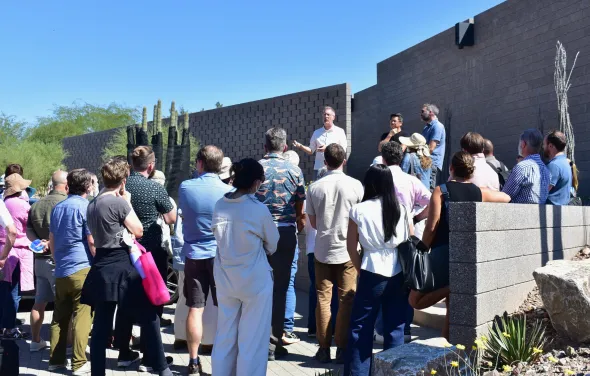
Arizona currently has three Phius Certified projects, one Design Certified project, and two Registered projects. Those who joined the pre-conference project tour had the opportunity to see two of these up close. These buildings are proof of concept for what's possible in the desert, and invaluable tools for introducing Phius to new audiences.
We're also exploring opportunities on the policy front, including work to position Phius as a pathway for increased competitiveness under Arizona's Qualified Allocation Plan.
But there's plenty of room to grow. In my experience, if most building professionals in Arizona think anything about passive building, they tend to confuse it with passive solar design or assume it's primarily intended for cold climates. We still have some work to do to show that passive building is just as relevant in the hot, dry Southwest.
PhiusCon in the Southwest
PhiusCon brought a bucket full of fertilizer to our growing garden, nourishing the local passive building movement in a few critical ways.
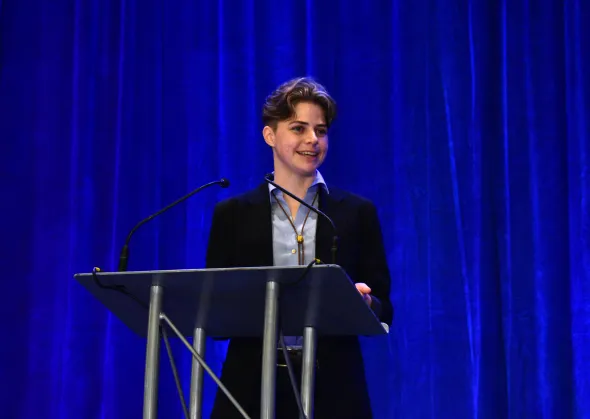
Alyssa Fink, a Phius Building Certification Associate and President of the Phius Alliance Southwest chapter, delivers opening remarks during PhiusCon 2026 in Phoenix
Connections. One of the best things about bringing hundreds of passionate professionals together is the chance to find people who share your interests and might become collaborators. I met a local builder for the first time, and we’re working together to plan a project tour for the near future. I also met a CPHC who recently moved to Tucson. These types of connections may seem small, but because our local movement is so young, their impact can be outsized.
Inspiration. For those of us working to grow passive building in a region where it's still relatively unfamiliar, seeing what's happening elsewhere is important. The journey can be long, and sometimes you need a reminder of what's possible. Hearing from professionals who have already worked through challenges we're just beginning to encounter helps us imagine what our own region could look like in 5-10 years.
Practical knowledge. There's a lot to learn when you're trying something for the first time. Hearing directly from people who have already navigated the process makes it easier to take that next step. A Phius-curious local developer, for example, attended PhiusCon to learn from professionals who have experience delivering passive buildings in other markets. That kind of knowledge-sharing is especially valuable when figuring out how to bring Phius to a new region.
Visibility. Not long after the conference, I attended Arizona Forward’s Statewide Sustainability Summit, where I had the opportunity to connect with local leaders and discuss opportunities for advancing building sustainability in the state. Conversations like these are fundamentally different when I can point to several hundred passive building professionals who gathered right here in Arizona just a month earlier. Although PhiusCon is over, it continues to serve as proof that passive building concepts are real, apply to our region, and have an established and legitimate presence here.
The Southwest at PhiusCon
PhiusCon showed up in the Southwest, but the Southwest showed up at PhiusCon, too.
Several local professionals shared their expertise through conference presentations, bringing regional perspectives and challenges into the broader passive building conversation. A few highlights included:
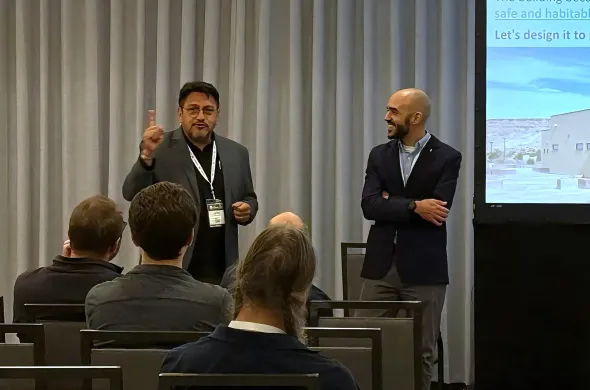
Xavier Obando (left) and Christopher Mancuso present during PhiusCon 2026
Passive Building at 5,000+ Feet: Morgan Law, Jesse Zacher, and John Loercher shared lessons learned from four high-elevation Phius Certified or Design Certified projects in Colorado, including approaches to dealing with the ways that reduced air density impacts HVAC system efficiency and a breakdown of how Phius Certification translated into insurance discounts.
High Performance Windows and Glazing in Cooling-Dominated Climates: A Growing Hot Opportunity: Brad Begin connected the history of window technology adoption to the resistance that passive building professionals face within the industry and from policymakers when discussing high-performance windows in hot climates. He also presented five lessons learned about the effective use of high-performance windows from a multitude of projects in cooling-dominated climates.
And there were more! Beyond the knowledge conveyed, these presentations provide something concrete to point to in future conversations with policymakers, developers, and other industry leaders to establish the expertise of local passive building professionals and applicability of passive building in addressing regional challenges.
The Phius Alliance Southwest board also spent time each day at our table outside the exhibit hall, helping attendees from across the region connect with one another. About half the people who stopped by were familiar faces to me, and the other half were new connections.
It was nice to see so many familiar faces from the Southwest sharing their work, and to see our region represented in a conversation that can often be dominated by other markets.
Keep Tending the Garden
For those of us working in Arizona and across the Southwest, the work continues. It’s important to remember that we're in this for the long haul. Growing a movement takes time, and we can't afford to burn ourselves out trying to make progress happen at once. Celebrate the small wins, build relationships, and keep showing up.
For those of you working in more established passive building markets, I have a request: keep sharing your successes and failures, especially the lessons from when you were first getting started. What seems routine to you today might be exactly the encouragement or practical advice someone in an emerging market needs to hear. Your work is an inspiration.
The seeds are planted. The soil is nourished. We've got plenty of sunlight. A few brave sprouts are pressing above the surface. It's time to grab the gloves, dig in, and keep tending the garden.