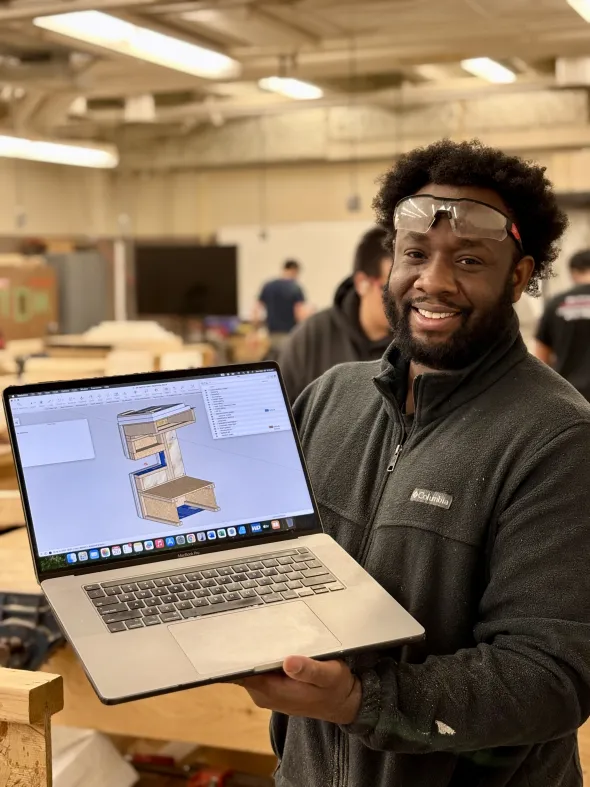
The guest blog below was written by Connor Malloy, a Phius Certified Builder and Professor and Program Coordinator at George Brown Polytechnic where he recently oversaw the delivery of the Phius Certified Builder training to students.
When we started looking at adding the Phius Certified Builder (CPHB) training to George Brown Polytechnic’s Building & Renovation Technology program, our goal was more than just adding another credential. We wanted students to really understand how passive buildings are built from the builder’s perspective.
What are our responsibilities as builders? How do our choices affect airtightness, durability, moisture control, thermal performance, sequencing, and how buildings perform over time? These were the questions we kept coming back to during the course.
Much of construction education mirrors what happens in the industry itself. Design and planning are often separated from construction. When we are educating young carpenters and builders, it is important to connect those two areas, so students understand the intent behind a detail when they try to execute it on site.
This past year was our first time teaching the Phius CPHB content in a college setting. We worked the official CPHB materials into two semester-long courses focused on building science and high-performance construction. Instead of making passive building a separate theory class, we worked its ideas into discussions around detailing, sequencing, mockups, quality control, and coordination between trades.
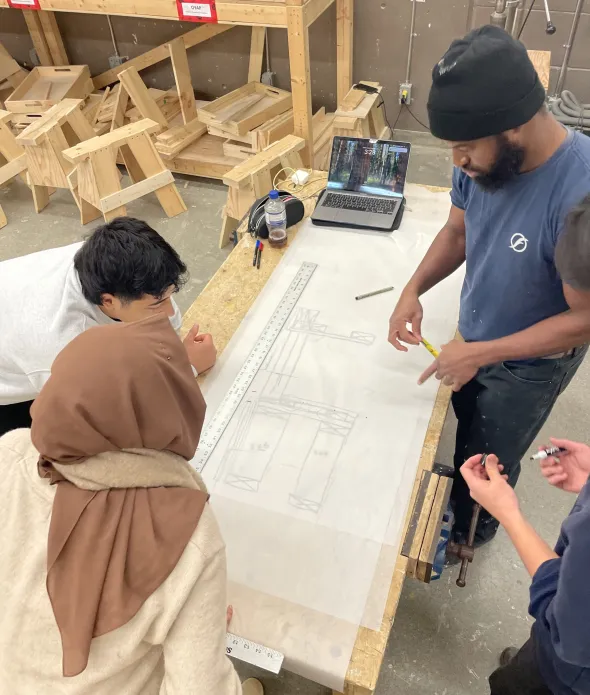
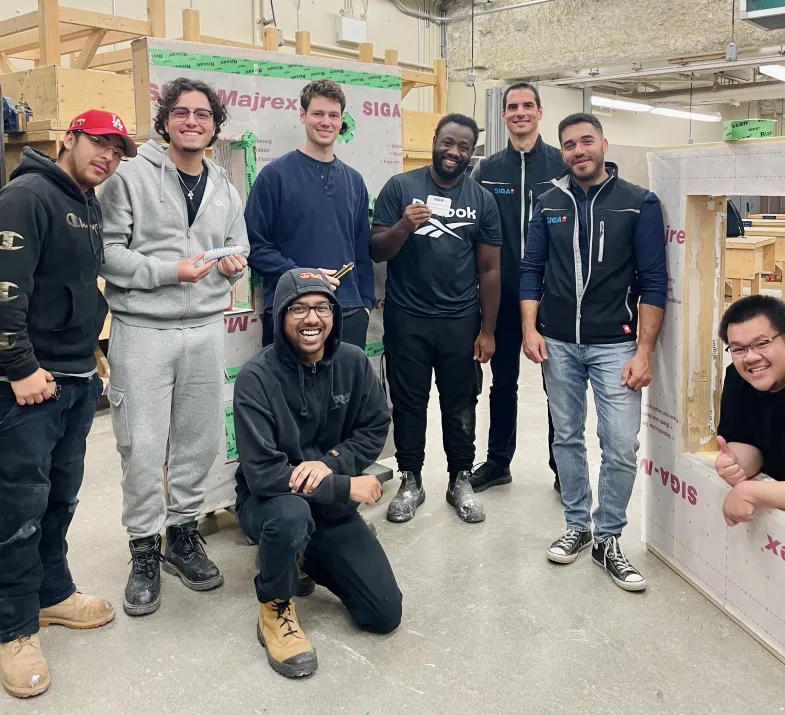
Students quickly noticed this course was different from the usual lecture-heavy classes. We did more than just talk about thermal bridges and airtightness targets on slides. Students drew details, built mockups in the shop, reviewed assemblies, and compared their work to what actually happens on site during blower door tests and visits.
Throughout the semester, we kept coming back to the idea of “plan, execute, verify.” Students would plan an assembly or detail on paper, build it as a mockup or observe it on site, and then check its performance through testing and review. That cycle became one of the most useful parts of the course because it reflected how good projects are supposed to work in the field.
Or at least how they are supposed to work.
High-performance construction is rarely about one “magic” product or proprietary tape. The projects that go well are usually the ones where the team planned ahead, communicated clearly, and verified the work as it was happening. A lot of the lessons came from looking at what happens when those things do not occur.
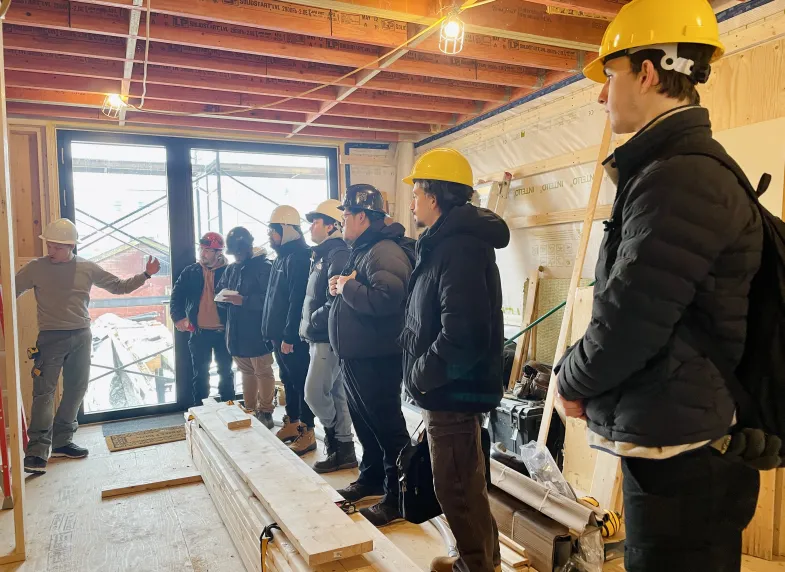
We added blower-door demonstrations, air-barrier reviews, hands-on mockups, and site visits to the coursework. That is when the material really started to make sense for many students.
One student commented:
“I can’t walk onto a job site the same way anymore. I’m constantly looking at how the air barrier connects.”
Another shared that the course made passive building feel “achievable instead of abstract.”
A lot of students assume high-performance buildings only happen on expensive custom projects with big budgets and unlimited patience. The Phius curriculum showed that better buildings usually come from better planning and execution, not from making things more complicated.
The Teacher’s Perspective
The curriculum itself was also surprisingly easy to teach from. The self-study modules gave students a consistent baseline before class and made it easy to see who was actually engaging with the material before we got into in-class exercises. The workbook also made it easy to structure discussions, exercises, and group participation without students feeling lost in the material.
The curriculum works well in a college setting. CPHB training is usually delivered in a much shorter format for experienced builders and industry professionals. Our students are still building their field experience and judgment, so we slowed things down, added hands-on exercises and mockups, and spent more time on site visits and diagnostics to make sure the material was actually resonating.
The Impact
A few weeks into the material, you could see the shift happen. Areas of a job site that students might normally walk past — and that need explaining — suddenly became things they were pointing out themselves. They were looking at drawing sets and tracing the continuity of the air control layer. They would visit a site and start asking how a window was being integrated into the WRB and air barrier strategy. They also became much more aware of water management and identifying areas where water might enter a building, which is still probably the number one killer of buildings, passive or not.
Most importantly, students left the course feeling confident. They learned that building performance is not the responsibility of just one consultant or designer. Builders, site supervisors, project managers, and trades all play a major role in whether a project succeeds or fails. That perspective fits very closely with how we approach construction education at George Brown College. The goal is not only to understand building science, but also how buildings are actually delivered.
As demand for higher performing buildings continues to grow, there is a real opportunity for post-secondary construction programs to add more practical high-performance training. For us, bringing the Phius CPHB into the program has helped give students a much stronger foundation before entering the industry.
About the Author
Connor Malloy
Professor and Program Coordinator, George Brown Polytechnic