Search our databases for:
Safe
Phius-certified buildings go through a rigorous quality control process, ensuring safety for the environment and the building inhabitants.

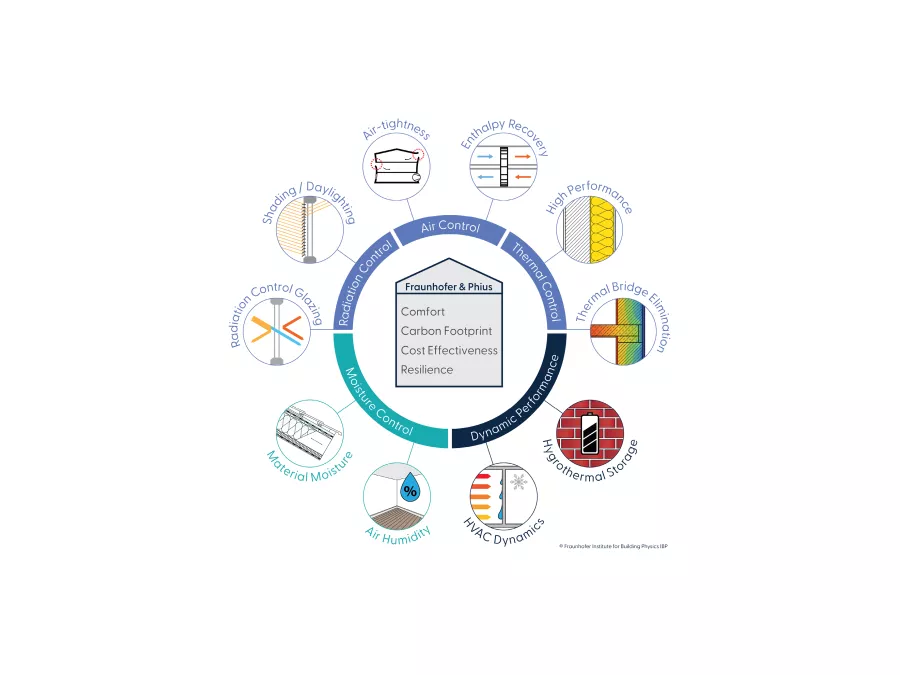
Dive into passive building principles, the Phius standards and the benefits afforded by passive buildings.
Passive building is an integrated building design and construction concept (methodology) that employs basic building science fundamentals to attain high levels of energy efficiency, comfort, durability, and health — in a passive way.
Passive building (also referred to as passive house) is not a brand name, but a tried and true construction concept based on five core principles that can be applied to any building type, for any construction type (new construction, renovation, etc.). Phius is the leading certifier of passive building projects in North America, utilizing a climate-specific, cost-optimized approach and third-party verification to ensure building performance.
The drastically reduced heating and cooling needs of passive buildings allows them to be predominantly heated by “passive” means, such as solar, or internal heat gains, versus a “conventional” building, which is typically heated by large, “active” mechanical systems.
Instead of designing a costly mechanical system to meet the needs of a poor performing building, Phius passive buildings are designed using a quality-and-conservation-first approach, reducing the overall energy needs of a building by 40-60% on average. After conservation and efficiency are maxed out, then resorting to renewable energy options is often the next step to reach net zero, not the other way around.

Phius-certified buildings go through a rigorous quality control process, ensuring safety for the environment and the building inhabitants.

Phius buildings have been proven to be more resilient in the event of natural disasters, such as wildfires and extreme heat and cold events.

Superb indoor air quality is a prerequisite for Phius certification – you can count on a healthy environment.

The holistic design of Phius buildings make them uniquely built for the long haul.

Superinsulation and efficient mechanical systems help maintain the strict comfort standards required for Phius certification.

Phius projects require minimal to no additional upfront costs, while guaranteeing substantial energy cost savings in the future.
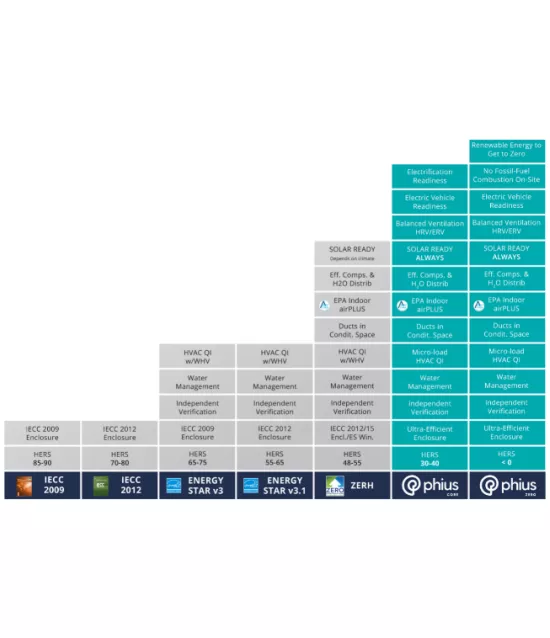
The Phius climate-specific passive building standards guide builders to success in the design and construction of passive buildings worldwide. They provide a quality-and-conservation-first framework for net zero building. They're internationally applicable and grounded in building science, best practices, and the quality assurance necessary to deliver optimal results. Phius offers a variety of standards to fit the goals and context of each project.